
 EN
EN
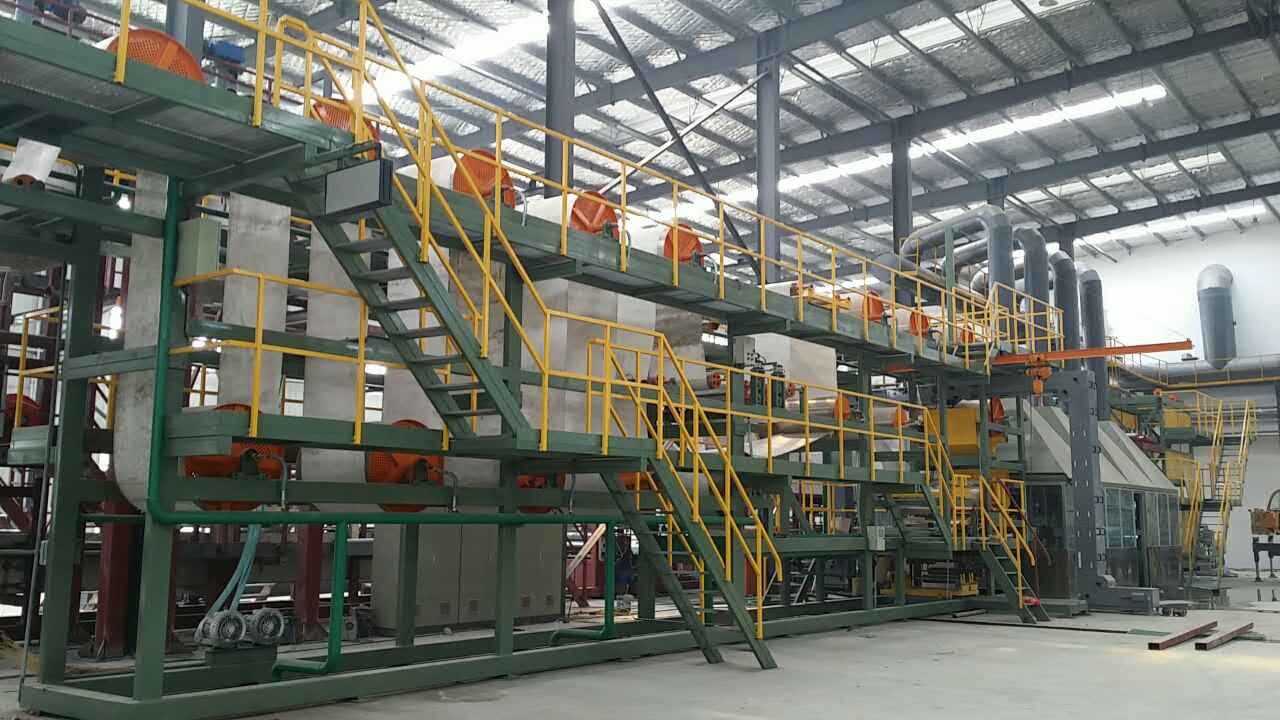
The construction and waterproofing industry has seen tremendous advancement in material technology over the past few decades, and at the heart of that progress is the app membrane production line. APP, or Atactic Polypropylene, is a bitumen modifier that significantly improves the thermal performance, flexibility, and durability of waterproofing membranes used in roofing, tunneling, bridge decks, and underground construction. Understanding how this production line is engineered, configured, and operated is essential for manufacturers seeking to deliver consistent, high-performance waterproofing products to a demanding global market.
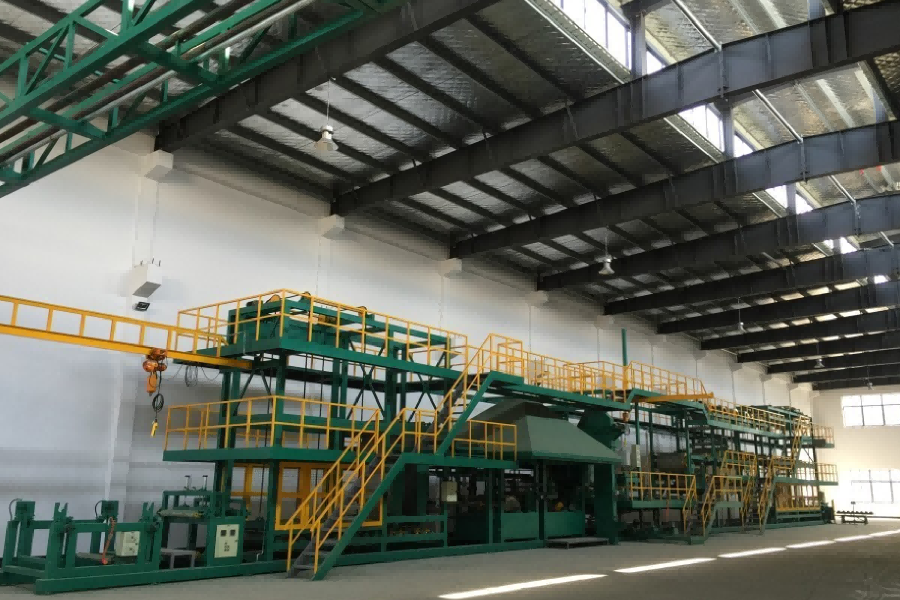
A well-designed app membrane production line integrates raw material handling, bitumen compounding, reinforcement feeding, coating and impregnation, surface treatment, cooling, and precision slitting—all within a continuous, automated workflow. Each subsystem must work in harmony to ensure the finished membrane meets strict technical standards for tensile strength, elongation, heat resistance, and waterproofing integrity. For manufacturers planning to invest in or upgrade this type of equipment, a thorough understanding of the line's architecture and operational logic is not just helpful—it is commercially critical.
Core Components of an APP Membrane Production Line
Bitumen Mixing and Compound Preparation Unit
The process in any app membrane production line begins in the bitumen mixing station, where base bitumen is heated and blended with atactic polypropylene and other additives including stabilizers, fillers, and plasticizers. This blending stage is critical because the quality of the compound directly determines the thermal stability and mechanical properties of the final membrane. Temperature control systems at this stage must maintain precise heating profiles—typically between 160°C and 200°C—to ensure complete polymer integration without degradation.
Industrial mixers used in the app membrane production line are high-shear units designed to achieve thorough homogenization of the bitumen and APP polymer blend. Poorly blended compound leads to inconsistencies in the final membrane, including uneven thickness, delamination, and poor cold-flex performance. Advanced production lines incorporate inline viscosity monitoring to provide real-time feedback that allows operators to adjust blending parameters dynamically, ensuring batch-to-batch consistency across long production runs.
The compounding unit also typically features multiple storage tanks with agitation systems to maintain the blended material in a homogeneous state while awaiting transfer to the coating stage. These tanks are insulated and temperature-controlled to prevent premature cooling or oxidation. The design of this upstream section of the app membrane production line has a direct impact on throughput efficiency and product quality outcomes downstream.
Reinforcement Carrier Feeding System
The reinforcement carrier—whether polyester nonwoven, fiberglass mat, or a composite scrim—serves as the structural backbone of the finished APP membrane. In a properly configured app membrane production line, the carrier feeding system must deliver the reinforcement at a controlled, consistent tension to prevent wrinkles, edge curl, or misalignment during impregnation. Automatic tension control systems with servo-driven unwind stations are standard features in modern lines.
Pre-treatment of the carrier fabric is also an important step managed within this section. Some production lines incorporate preheat rollers or infrared heaters that warm the carrier before it contacts the bitumen compound, improving penetration and adhesion. The width and grammage of the reinforcement material must be matched precisely to the production line's coating die specifications and intended product range, making the feeding system a configurable component that varies from one app membrane production line to another.
Coating, Impregnation, and Surface Treatment Processes
Bitumen Coating and Impregnation Die Technology
The coating die is the operational core of the app membrane production line, where the hot bitumen compound is applied and forced into the reinforcement carrier to form a unified composite structure. Modern dies are precision-machined to deliver an even compound curtain across the full working width of the membrane, ensuring uniform thickness on both upper and lower surfaces. The gap between the die lips is adjustable and can be set to accommodate different product specifications ranging from 3mm to 5mm or beyond.
Impregnation quality depends not only on die geometry but also on compound temperature and line speed. In a well-tuned app membrane production line, these variables are coordinated through PLC-based process control systems that synchronize material flow rate with conveyor speed. Insufficient impregnation results in voids within the membrane structure, which compromises waterproofing performance and long-term durability. Excess compound, on the other hand, increases material cost and can cause handling issues downstream.
Some advanced configurations of the app membrane production line feature dual-coating stations arranged in series, allowing manufacturers to apply different compound formulations to the top and bottom surfaces. This is particularly relevant for specialty membranes where one face requires enhanced UV resistance or chemical resistance while the other face needs superior adhesion to substrates. This flexible architecture expands the product portfolio a single line can support.
Surface Finish Application: Sand, Film, and Mineral Granule Stations
Once the bitumen coating is applied and the carrier is fully impregnated, the membrane surface must be treated to prevent self-adhesion during roll winding and to provide functional surface properties. In the app membrane production line, this is accomplished through surface finish application stations that can apply fine sand, polyethylene film, aluminum foil, or mineral granules depending on the intended product specification.
Mineral granule surfacing is particularly common for exposed roofing membranes, where the granules provide UV protection and aesthetic finish. The granule application system must distribute the material evenly across the membrane width and embed it sufficiently into the still-soft compound surface. Calibrated rollers following the granule station press the particles into the compound, ensuring mechanical anchorage.
Polyethylene film lamination is used for membranes intended for torch-applied or self-adhesive installation, preventing blocking during storage and transport. In the app membrane production line, the film unwinding and lamination station is positioned immediately after the coating die, applying film to the underside or both surfaces as required. Maintaining consistent film tension and temperature at this station is essential to prevent wrinkling or air entrapment between the film and the compound surface.
Cooling, Calendering, and Dimensional Accuracy
Water Cooling Tank and Chill Roll Configuration
After the coating and surface treatment stages, the membrane must be cooled rapidly to solidify the compound and lock in the desired thickness and surface profile. In a standard app membrane production line, this is accomplished using a combination of water cooling tanks and temperature-controlled chill rolls. The transition from hot to ambient temperature must be managed carefully to avoid warping, internal stress, or dimensional distortion in the finished product.
Water cooling tanks in the app membrane production line are typically sectioned into zones with progressively decreasing temperatures to provide gradual cooling rather than thermal shock. The membrane passes through these zones partially submerged, with guide rollers maintaining proper tracking and tension. Post-tank air knives or squeegee rollers remove surface water before the membrane enters the calendar section.
Chill rolls provide the final thickness calibration and surface smoothing step. The gap between these precision rolls is set according to the target membrane thickness, and their temperature is held constant through internal water circulation. In a high-output app membrane production line, chill roll temperature stability is a key variable that affects both dimensional consistency and surface appearance of the finished product.
Thickness Gauging and Online Quality Control
Modern app membrane production lines are equipped with non-contact thickness measurement systems that continuously scan the membrane cross-section during production. These systems, often based on isotope or ultrasonic technology, provide real-time thickness data that can be fed back into the control system to make automatic corrections to die gap settings or line speed. Consistent thickness is a critical quality parameter because membranes that are too thin may fail under hydrostatic pressure, while membranes that are too thick increase cost and reduce roll length per unit weight.
Online quality monitoring in the app membrane production line extends beyond thickness to include surface defect detection using vision cameras, compound temperature logging, and tension monitoring at multiple points along the line. Data from these systems is stored and can be used for production reporting, quality traceability, and process optimization. Manufacturers who invest in comprehensive online monitoring capabilities gain a significant advantage in quality consistency and customer confidence.
Winding, Slitting, and Finished Product Handling
Automatic Roll Winding Systems
At the end of the app membrane production line, the cooled and finished membrane is wound into rolls of specified length and diameter. Automatic winding stations with surface or center-drive configurations ensure tight, uniform winding without edge damage or roll telescoping. Winding tension is programmed to taper appropriately as roll diameter increases, preventing the inner layers from being crushed by the outer layers.
Modern app membrane production lines incorporate automatic core loading and roll transfer systems that minimize operator intervention and reduce downtime between roll changes. Flying splice or automatic transfer designs allow continuous production during winding changeover, which is critical for maintaining throughput efficiency on high-speed lines. Finished rolls are automatically labeled and transferred to a conveyor system for downstream packaging and palletizing.
Slitting and Edge Trimming Units
Many APP membranes are produced in a master width and then slit to standard commercial widths—typically 1 meter—before or after winding. In an integrated app membrane production line, slitting stations equipped with rotary or razor blade cutting systems perform this operation with high precision. Edge trim material is collected and recycled back into the production process where possible, supporting waste reduction and cost efficiency.
Accurate slitting in the app membrane production line requires the membrane to be fully cooled and dimensionally stable before cutting. Slitting too early, when the compound is still warm and soft, results in edge deformation and unclean cuts. Blade sharpness and alignment must be maintained regularly to ensure clean, consistent edges that meet commercial appearance standards and allow proper roll packaging.
Automation, Control Systems, and Energy Efficiency
PLC and SCADA Integration in Modern Lines
Contemporary app membrane production lines rely on integrated PLC and SCADA architectures to coordinate the operation of all subsystems from a centralized control interface. Operators can monitor and adjust temperature zones, line speed, compound flow rates, tension settings, and cooling parameters from a single HMI screen. This level of integration reduces the risk of human error, improves process repeatability, and enables rapid product changeover between different membrane specifications.
Alarm management systems within the app membrane production line's control architecture provide early warning of deviations from set parameters, allowing operators to intervene before quality issues develop into significant waste or production stoppages. Data logging capabilities allow manufacturers to analyze production trends over time, identify recurring issues, and implement continuous improvement programs that enhance both quality and output efficiency.
Energy Management and Thermal Efficiency
Energy consumption is a significant operating cost in any app membrane production line because of the sustained high temperatures required to keep bitumen compounds fluid throughout the process. Thermal insulation of heated components, heat recovery systems that capture waste heat from the cooling sections, and variable-frequency drives on major motors all contribute to reducing the energy footprint of the production line.
Manufacturers evaluating the total cost of ownership of an app membrane production line should carefully assess the energy efficiency specifications of candidate equipment. Differences in insulation quality, heat exchanger design, and drive technology can result in meaningful differences in energy cost per square meter of membrane produced over the operational life of the line. This makes energy efficiency a financially relevant selection criterion alongside throughput capacity and product quality capability.
FAQ
What types of membranes can be produced on an APP membrane production line?
An app membrane production line is primarily designed for the manufacture of APP-modified bitumen waterproofing membranes, but with appropriate configuration changes, the same equipment platform can also accommodate SBS-modified bitumen membranes. The key difference lies in compound formulation and processing temperatures. Surface finish options—including sand, film, granules, and foil—allow a single app membrane production line to produce multiple product variants targeting different applications such as roofing, tunneling, bridge waterproofing, and foundation protection.
What is the typical production speed of an APP membrane production line?
Production speeds for a modern app membrane production line typically range from 8 to 25 meters per minute depending on membrane thickness, surface finish type, and the complexity of the product specification. Thicker membranes with mineral granule surfacing run at lower speeds to ensure complete impregnation and proper granule embedment, while thinner torch-applied membranes with film surfacing can run at the higher end of the speed range. Line speed is always balanced against compound throughput, cooling capacity, and winding station performance.
How is quality consistency maintained throughout an APP membrane production line?
Quality consistency in an app membrane production line is achieved through a combination of precise temperature control, closed-loop tension management, online thickness gauging, and automated process control systems. Regular calibration of measurement instruments, preventive maintenance of critical components such as dies and chill rolls, and systematic process audits all contribute to maintaining product quality within specification. Operators trained in process troubleshooting are also essential to respond effectively to the inevitable process variations that occur during long production campaigns.
What factors should be considered when selecting an APP membrane production line?
Key selection factors for an app membrane production line include the intended product range and target specifications, required production capacity, degree of automation, energy efficiency, availability of technical support and spare parts, and the supplier's track record in the waterproofing membrane industry. The working width of the line, its compatibility with different reinforcement carrier types, and the flexibility of its compound preparation system to handle varying formulations should all be assessed in the context of the manufacturer's specific business requirements and growth plans.
Table of Contents
- Core Components of an APP Membrane Production Line
- Coating, Impregnation, and Surface Treatment Processes
- Cooling, Calendering, and Dimensional Accuracy
- Winding, Slitting, and Finished Product Handling
- Automation, Control Systems, and Energy Efficiency
-
FAQ
- What types of membranes can be produced on an APP membrane production line?
- What is the typical production speed of an APP membrane production line?
- How is quality consistency maintained throughout an APP membrane production line?
- What factors should be considered when selecting an APP membrane production line?