 EN
EN
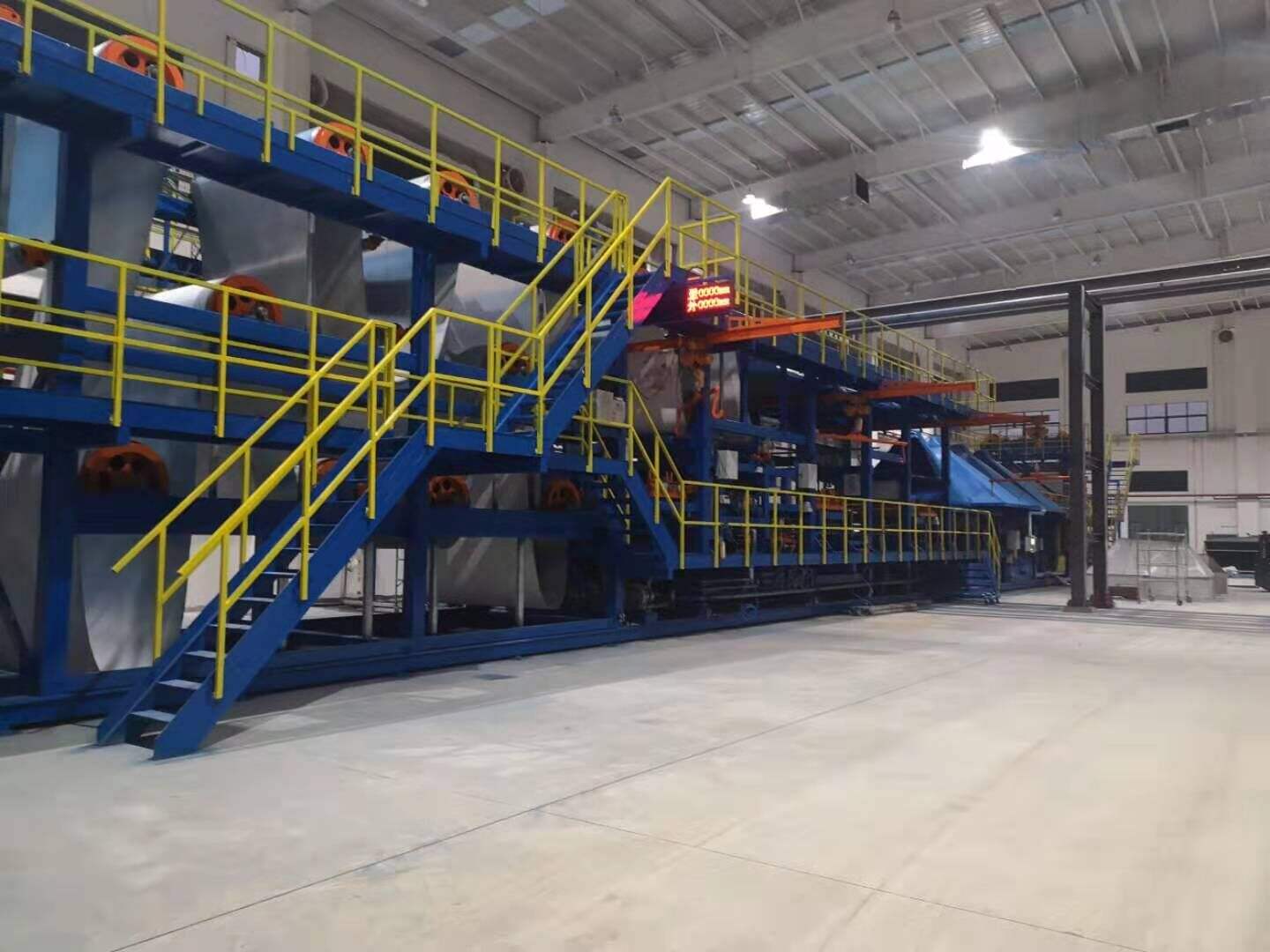
Investing in an app membrane production line is a significant capital decision for any manufacturer operating in the elastomeric components, sealing, or industrial membrane sector. The upfront costs can appear daunting, but understanding the full financial picture — including operational savings, throughput gains, and long-term margin improvements — reveals a far more compelling case for investment. This analysis is designed to help procurement managers, plant engineers, and business owners evaluate whether the cost of an app membrane production line is justified by the return on investment it delivers over time.
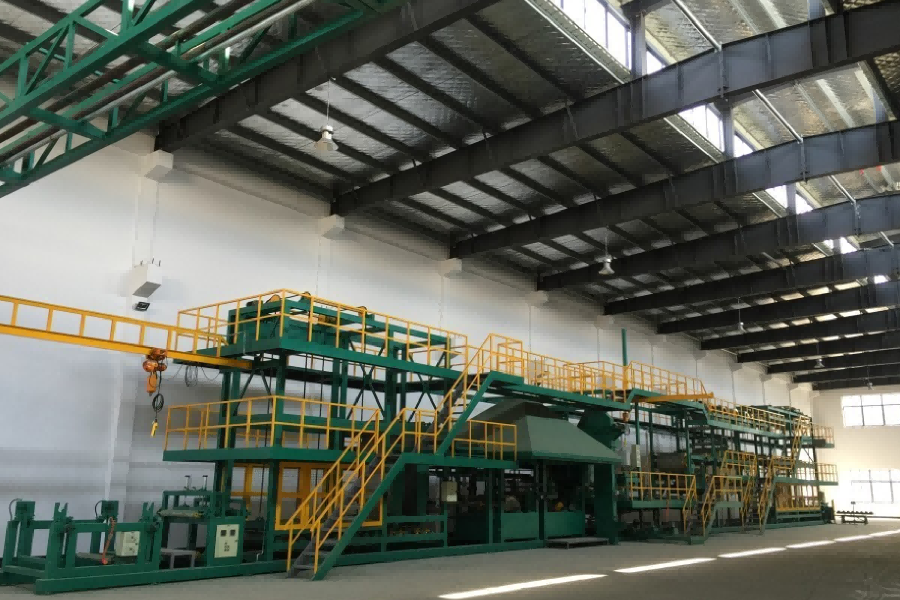
Unlike many machinery investments where ROI calculations follow a standard depreciation model, the app membrane production line involves multiple interdependent variables: material utilization rates, labor efficiency, reject rates, production speed, energy consumption, and product quality consistency. Each of these factors contributes to the financial outcome in distinct ways, and failing to account for even one of them can lead to either overestimating or underestimating the true cost-benefit ratio. This article breaks down both sides of the equation with the clarity that industrial decision-makers need.
Understanding the True Cost Structure of an App Membrane Production Line
Capital Expenditure and Equipment Costs
The most visible component of any app membrane production line investment is the initial capital expenditure. This encompasses the purchase price of the primary machinery, ancillary equipment, installation costs, and any facility modifications required to accommodate the new line. Depending on the configuration — whether it is a compact single-cavity system or a fully automated multi-station line — pricing can vary substantially.
Beyond the machinery itself, buyers must factor in transportation and commissioning fees, operator training programs, and integration costs if the line needs to interface with existing manufacturing execution systems or quality control platforms. These secondary costs are frequently underestimated in initial budget projections, yet they can represent a meaningful portion of total capital outlay. A comprehensive cost model for an app membrane production line must account for every stage from delivery to full production readiness.
It is also important to consider tooling and mold expenses, particularly if the production line is designed for customized membrane geometries. Tooling amortization should be spread across expected production volumes to arrive at an accurate per-unit cost contribution. This granular approach ensures that the cost side of the ROI analysis reflects operational reality rather than just headline machinery prices.
Ongoing Operational and Maintenance Costs
Once an app membrane production line is running, the focus shifts from capital to operational expenditure. Energy consumption is one of the largest recurring costs, especially in lines that incorporate hydraulic presses, heated platens, or curing ovens. Understanding kilowatt-hour consumption per production cycle and multiplying it by local energy rates gives a reliable baseline for annual energy costs.
Maintenance planning is equally critical. Scheduled preventive maintenance — including hydraulic fluid changes, seal replacements, platen calibration, and conveyor system checks — carries a predictable annual cost that should be built into the ROI model from day one. Unplanned downtime resulting from deferred maintenance tends to be far more expensive than scheduled servicing, both in terms of direct repair costs and lost production hours.
Labor requirements must also be assessed carefully. While modern automated app membrane production line configurations significantly reduce the number of operators needed per shift, skilled technicians are still required for process monitoring, quality inspection, and maintenance oversight. These labor costs form a steady operational baseline that directly influences the profitability margin of each production run.
Revenue and Throughput Gains That Drive ROI
Production Capacity and Output Volume
The most direct driver of positive ROI on an app membrane production line is increased production capacity. A well-configured line can dramatically increase the number of units produced per shift compared to manual or semi-automated alternatives. This throughput advantage translates directly into higher revenue potential, particularly when market demand exceeds current supply capabilities.
Cycle time reduction is a key metric in this analysis. If an automated app membrane production line reduces per-unit cycle time by even 15 to 20 percent compared to legacy methods, the compounding effect on annual output volume is substantial. Over a standard three-shift operation, this can translate to tens of thousands of additional units per year — all produced with the same or smaller workforce.
It is also worth noting that higher throughput allows manufacturers to take on larger customer orders and longer-term contracts, which typically come with better pricing stability and reduced customer acquisition costs. The indirect commercial benefits of higher production capacity are a meaningful but often overlooked component of the overall ROI picture for an app membrane production line.
Quality Consistency and Reject Rate Reduction
In membrane manufacturing, product consistency is not merely a quality preference — it is a commercial necessity. Industrial buyers in sectors such as automotive, HVAC, water treatment, and pneumatics operate under strict dimensional and performance tolerances. Any deviation from specification results in rejection, rework, or — worse — downstream field failures that damage supplier relationships.
A well-engineered app membrane production line incorporates precision control systems that maintain consistent vulcanization temperature, curing pressure, and cycle timing across every part produced. The result is a significantly lower reject rate compared to manually controlled or older-generation equipment. When reject rates fall, material waste decreases, effective yield increases, and per-unit production costs drop accordingly.
Quantifying this benefit is straightforward: calculate the current cost of rejected parts — including wasted material, rework labor, and downstream inspection — and compare it against the projected reject rate under the new app membrane production line. This delta is a direct financial gain that contributes to ROI in every production cycle. For high-volume producers, even a one-percentage-point improvement in yield can represent substantial annual savings.
Payback Period and Break-Even Analysis
How to Calculate the Payback Period Accurately
The payback period for an app membrane production line is calculated by dividing total capital investment by annual net cash flow generated by the line. Net cash flow is derived from the combination of incremental revenue from higher output, savings from reduced labor, savings from lower reject rates, and energy efficiency gains — minus annual operating costs.
For a mid-tier automated production line, payback periods in the range of two to four years are commonly observed in membrane manufacturing environments, assuming consistent order volume and stable material costs. Lines that serve high-demand markets or replace particularly inefficient legacy processes may achieve payback in under two years. Conversely, underutilized lines or those deployed in low-margin product categories may extend payback to five years or beyond.
The critical variable in this calculation is utilization rate. An app membrane production line running at 85 percent of nameplate capacity will generate a fundamentally different cash flow profile than one running at 50 percent. This is why pre-investment demand planning — based on confirmed orders, pipeline forecasts, and market growth projections — is so essential to building a credible payback model.
Long-Term Value Beyond the Break-Even Point
Once an app membrane production line passes its break-even point, it enters a phase of pure value generation. At this stage, the line continues to produce revenue while its amortized capital cost effectively falls to zero. Operational costs remain, but the margin contribution from each unit produced becomes increasingly favorable over time, particularly if market prices hold or improve.
Additionally, modern production lines are designed for long service lives, often exceeding ten to fifteen years with proper maintenance. This extended operational lifespan means that the ROI window is not limited to the initial payback period but extends across a much longer horizon. Manufacturers who factor in this full lifecycle gain a far more accurate and optimistic picture of total return on investment.
There is also strategic value to consider. Operating a reliable, high-output app membrane production line positions a manufacturer as a capable, scalable supplier in the eyes of major industrial customers. This reputational and competitive advantage has tangible business value that, while difficult to quantify precisely, contributes meaningfully to the long-term commercial return of the investment.
Risk Factors That Can Erode ROI
Demand Volatility and Market Risk
The most significant risk to ROI on an app membrane production line is demand volatility. If order volumes fluctuate significantly or a major customer reduces purchasing, utilization rates drop and the financial model underlying the investment may no longer hold. This risk can be mitigated through diversified customer portfolios, long-term supply contracts, and flexible production configurations that allow the line to produce multiple membrane variants.
Market risk also encompasses raw material price fluctuations. Elastomeric compounds, which form the primary input for most membrane production processes, are subject to commodity pricing pressures. A significant rise in material costs without a corresponding ability to pass through price increases can compress margins and extend the payback period. Including sensitivity analysis around material price scenarios is a prudent step in any app membrane production line ROI model.
Technical and Operational Risk
Technical risks include equipment reliability, the learning curve associated with new production processes, and integration challenges with existing plant systems. A poorly planned installation or insufficient operator training can result in extended ramp-up periods, during which the app membrane production line operates below capacity and fails to generate the expected cash flows.
Supplier support quality is another operational risk factor. Access to timely spare parts, responsive technical service, and ongoing process optimization support from the equipment manufacturer can significantly influence actual versus theoretical performance. Before committing to a purchase, manufacturers should evaluate the service infrastructure behind any app membrane production line they are considering, not just the machine specifications.
Mitigating these risks through thorough due diligence, pilot runs, and strong contractual protections helps protect the projected ROI and ensures that the investment delivers its full financial potential over time.
FAQ
What is the typical ROI timeline for an app membrane production line?
The typical payback period for an app membrane production line ranges from two to four years, depending on utilization rates, production volume, product margins, and the efficiency gap being bridged compared to prior methods. High-demand environments with confirmed order backlogs can achieve payback closer to eighteen to twenty-four months.
How does reject rate improvement affect the ROI of an app membrane production line?
Reject rate reduction is one of the most direct and quantifiable contributors to positive ROI. Every percentage point of yield improvement lowers material waste, reduces rework labor, and increases effective output from the same raw material input. For high-volume app membrane production line operations, cumulative annual savings from quality consistency improvements can rival the value generated by throughput increases alone.
What factors most strongly influence the total cost of an app membrane production line?
The dominant cost factors include initial equipment purchase price, tooling and mold costs, installation and commissioning expenses, energy consumption per cycle, planned maintenance costs, and labor requirements. For a complete cost picture, buyers should also include operator training, system integration, and any facility upgrade costs associated with deploying a new app membrane production line.
How can manufacturers reduce risk when investing in an app membrane production line?
Risk reduction strategies include conducting demand validation before purchase, diversifying the customer base to protect utilization rates, selecting equipment with strong after-sales support, building raw material cost scenarios into the financial model, and negotiating phased payment structures where possible. A thorough pre-investment analysis of both the cost and ROI dimensions of an app membrane production line is the most reliable foundation for a sound capital decision.
Table of Contents
- Understanding the True Cost Structure of an App Membrane Production Line
- Revenue and Throughput Gains That Drive ROI
- Payback Period and Break-Even Analysis
- Risk Factors That Can Erode ROI
-
FAQ
- What is the typical ROI timeline for an app membrane production line?
- How does reject rate improvement affect the ROI of an app membrane production line?
- What factors most strongly influence the total cost of an app membrane production line?
- How can manufacturers reduce risk when investing in an app membrane production line?