 EN
EN
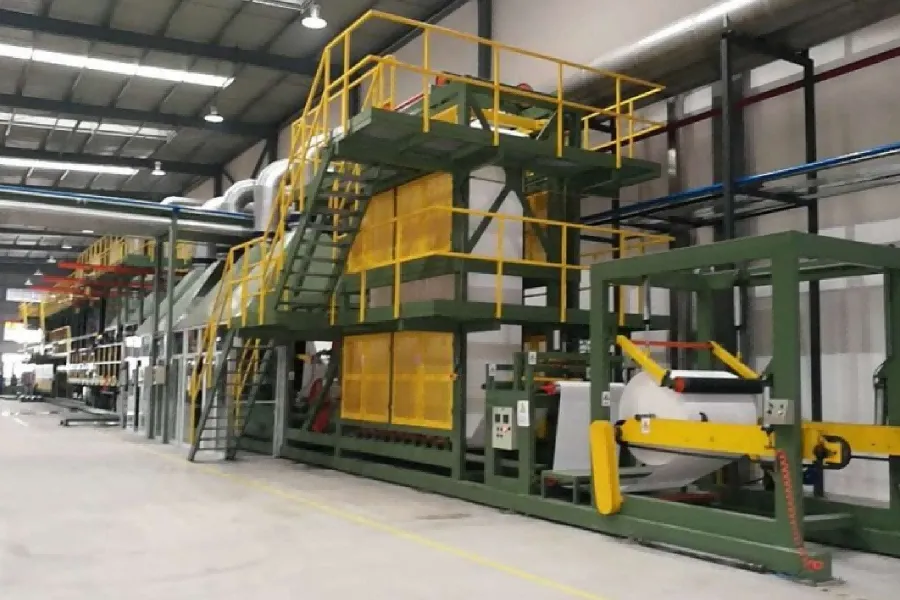
Manufacturers in the elastomer and polymer processing industries face a critical decision when establishing or upgrading their production capabilities: choosing between automated and manual app membrane production lines. This choice fundamentally impacts production efficiency, product consistency, labor costs, and long-term scalability. An app membrane production line is essential for creating high-quality elastomeric membranes used across automotive, aerospace, electronics, and industrial sealing applications. Understanding the operational, financial, and technical differences between automated and manual systems enables informed capital investment decisions that align with business growth objectives and quality standards.
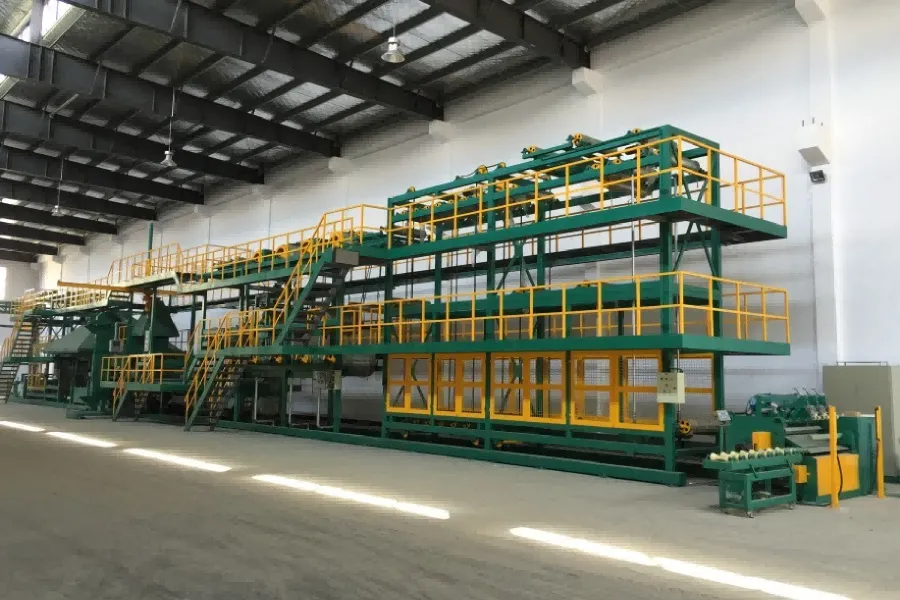
The distinction between automated and manual app membrane production lines extends beyond simple mechanization. Automated systems integrate advanced control mechanisms, precision material handling, computerized process monitoring, and minimal human intervention throughout the manufacturing cycle. Manual production lines rely predominantly on operator skill, hand-controlled equipment, and human judgment for quality assurance. Both approaches deliver functional elastomer membranes, yet they differ substantially in throughput capacity, repeatability, initial investment requirements, and operational flexibility. This comprehensive analysis examines the technical architecture, performance characteristics, cost implications, and suitability factors for each production line type to guide manufacturers toward the optimal configuration for their specific operational context.
Core Operational Differences Between Production Line Types
Process Control and Execution Mechanisms
The fundamental operational distinction between automated and manual app membrane production lines lies in how process parameters are controlled and executed. Automated systems employ programmable logic controllers, servo motors, and digital interfaces that maintain precise control over temperature, pressure, mixing ratios, curing times, and material flow rates. These systems execute predetermined recipes with minimal variation, ensuring each production cycle replicates the exact conditions of previous runs. Sensors continuously monitor critical parameters and trigger automatic adjustments when deviations occur, maintaining process stability without operator intervention.
Manual production lines depend on operator expertise to set and maintain process conditions. Workers manually adjust temperature controllers, regulate material feed rates, monitor mixing consistency through visual inspection, and determine curing completion based on experience and tactile assessment. While skilled operators can produce excellent quality membranes, the inherent variability in human judgment and physical manipulation introduces batch-to-batch inconsistencies that automated systems eliminate through digital precision. Manual systems require constant operator attention throughout production cycles, whereas automated lines operate autonomously once programs are loaded and materials are supplied.
Material Handling and Processing Workflows
Material handling represents another critical operational difference affecting production efficiency and product quality. Automated app membrane production lines incorporate mechanized material transport systems, including conveyor belts, robotic pick-and-place units, and automated material feeders that move raw materials, intermediate products, and finished membranes through sequential processing stages without manual transfer. These systems maintain consistent material orientation, prevent contamination from handling, and synchronize material flow with processing station capacities to eliminate bottlenecks.
Manual production lines require operators to physically transfer materials between workstations, which introduces handling time, potential for material damage, and contamination risks from environmental exposure. Workers must manually load raw elastomers into mixers, transfer mixed compounds to molding or extrusion equipment, reposition partially processed membranes for additional processing steps, and remove finished products for inspection and packaging. This manual intervention increases cycle times, creates opportunities for repetitive strain injuries, and limits throughput scalability since material handling capacity directly correlates with available labor.
Quality Control and Inspection Integration
Quality assurance methodologies differ substantially between automated and manual app membrane production lines. Automated systems integrate inline inspection technologies such as laser thickness measurement, optical defect detection, automated tensile testing, and statistical process control software that continuously evaluates product specifications against quality standards. Non-conforming products are automatically flagged or rejected without entering downstream processes, preventing defect propagation and reducing waste. Data from quality sensors feeds back into process controllers, enabling real-time parameter adjustments that prevent defects rather than merely detecting them after occurrence.
Manual production lines typically employ offline quality inspection where operators or dedicated quality personnel periodically sample products for measurement and testing after production stages complete. This approach introduces time delays between defect generation and detection, potentially allowing multiple non-conforming batches to accumulate before problems are identified. Manual inspection relies on visual assessment, hand-held measurement tools, and laboratory testing that consume time and require specialized personnel. The sampling-based approach inherent to manual inspection means some defective products may escape detection, particularly when defect rates are low and sampling frequencies are insufficient.
Performance Characteristics and Production Capabilities
Throughput Capacity and Production Speed
Production volume capabilities represent one of the most significant performance differences between automated and manual systems. An app membrane production line configured with full automation typically achieves two to five times higher throughput than equivalent manual systems due to faster cycle times, elimination of manual handling delays, and ability to operate continuously without fatigue-related slowdowns. Automated systems maintain consistent production speeds throughout shifts and across days, whereas manual line output naturally varies with operator energy levels, experience, and working conditions.
Automated production lines excel in high-volume manufacturing environments where economies of scale justify capital investment. These systems can operate continuously across multiple shifts with minimal supervision, maximizing equipment utilization rates and spreading fixed costs across larger production volumes. Manual lines suit lower-volume applications where production flexibility and lower capital investment take priority over maximum throughput. The break-even volume where automation becomes economically advantageous varies by product complexity, labor costs, and quality requirements, but typically occurs when sustained daily production exceeds several hundred to several thousand membrane units depending on part geometry and material specifications.
Consistency and Repeatability Metrics
Product consistency represents a critical performance dimension where automated app membrane production lines demonstrate clear advantages. Automated systems achieve process capability indices typically exceeding 1.67, indicating robust control over dimensional tolerances, material properties, and surface finish characteristics. This consistency stems from digital control precision, elimination of human variability, and automated compensation for environmental fluctuations such as ambient temperature and humidity variations that affect elastomer processing.
Manual production lines exhibit greater batch-to-batch variability due to inherent limitations in human repeatability. Operator fatigue, differences in technique between shifts, and subjective judgment in process adjustments contribute to wider statistical distributions of product characteristics. While experienced operators can achieve excellent quality, maintaining that quality consistently across all production cycles requires continuous attention, training, and supervision that automated systems eliminate through programmatic control. Applications requiring tight tolerances or certified quality standards often mandate automated production to meet statistical process control requirements that manual methods struggle to achieve consistently.
Flexibility and Changeover Capabilities
Production flexibility presents a dimension where manual systems sometimes offer advantages over automated configurations. Manual app membrane production lines adapt quickly to product variations, allowing operators to modify processes based on material behavior observations and make immediate adjustments for new formulations or geometries. Changeovers between different membrane specifications can often be completed rapidly with manual systems since adjustments involve mechanical repositioning and parameter changes that experienced operators execute efficiently without complex reprogramming.
Automated systems require formal programming changes, recipe development, and testing cycles when introducing new products or significant specification modifications. However, modern automated lines increasingly incorporate quick-changeover features, modular tooling systems, and recipe management software that reduce changeover times substantially. Once programmed, automated systems execute new product configurations with the same precision and repeatability as established products, eliminating the learning curve and trial-and-error refinement typical of manual production when introducing changes. For manufacturers producing multiple membrane variants or frequently updating specifications, the flexibility advantage depends on whether rapid adaptation or consistent execution of defined specifications takes priority.
Economic Considerations and Investment Analysis
Capital Investment Requirements and Depreciation
The initial capital investment for automated app membrane production lines substantially exceeds manual system costs, typically ranging from three to ten times higher depending on automation sophistication, production capacity, and integration complexity. Automated systems require significant expenditures for robotics, control systems, sensors, software, and specialized processing equipment designed for automated operation. Installation costs also increase due to requirements for electrical infrastructure, network connectivity, and precise mechanical alignment necessary for automated equipment coordination.
Manual production lines present lower barriers to entry, making them accessible to smaller manufacturers or companies entering membrane production without extensive capital resources. Basic manual systems can be assembled from standard industrial equipment, requiring minimal custom engineering and allowing phased capacity expansion as production volumes grow. However, the lower initial investment must be weighed against higher ongoing operational costs and limited scalability. Depreciation schedules for automated equipment typically extend seven to ten years, requiring manufacturers to maintain sufficient production volumes throughout equipment lifespan to justify the investment through operational savings and quality improvements.
Labor Costs and Workforce Requirements
Operational labor costs represent the primary economic advantage of automated app membrane production lines over manual alternatives. Automated systems typically require one to two operators per shift for supervision, material loading, and exception handling, whereas manual lines need four to eight operators depending on production line complexity and throughput targets. This labor reduction translates directly to lower recurring costs, particularly in regions with high wage rates or stringent labor regulations that increase employment costs beyond base salaries.
Beyond direct labor savings, automated systems reduce indirect costs associated with workforce management, including recruitment, training, benefits administration, and turnover-related disruptions. Manual production lines require continuous investment in operator skill development to maintain quality standards and process efficiency. Experienced operators become critical resources whose departure creates knowledge gaps and quality risks. Automated systems encode process knowledge in software and equipment configurations, making organizations less dependent on individual expertise and more resilient to workforce changes. The labor cost differential between automated and manual app membrane production lines typically reaches payback within two to four years in moderate-to-high wage environments, accelerating in regions with tight labor markets or specialized skill shortages.
Maintenance Expenses and Technical Support
Maintenance requirements present a more complex economic comparison between production line types. Automated systems incorporate sophisticated mechanical, electrical, and electronic components that require preventive maintenance, periodic calibration, and specialized technical support. Maintenance costs for automated app membrane production lines typically consume two to four percent of initial capital investment annually, including spare parts, technical service contracts, and software updates. Organizations must employ or contract maintenance technicians with expertise in programmable controllers, servo systems, and industrial networks, skills that command premium compensation.
Manual production lines feature simpler mechanical systems with fewer electronic components, reducing maintenance complexity and associated costs. Routine maintenance often falls within capabilities of general industrial maintenance personnel without specialized automation training. However, manual systems may experience higher wear rates on components subject to repetitive operator manipulation, and lack diagnostic capabilities that enable predictive maintenance in automated systems. Unexpected failures in manual systems require troubleshooting based on operator observation and mechanical inspection, potentially extending downtime compared to automated systems that provide detailed diagnostic data pinpointing failure causes. Total maintenance costs over equipment lifespan typically favor automated systems despite higher per-incident costs due to reduced failure frequency and optimized maintenance scheduling enabled by condition monitoring.
Technical Specifications and Integration Requirements
Control System Architecture and Software Platforms
The control system architecture fundamentally distinguishes automated from manual app membrane production lines. Automated systems employ hierarchical control structures with programmable logic controllers managing real-time equipment operation, supervisory control and data acquisition systems coordinating production sequences across multiple workstations, and manufacturing execution systems integrating production line activities with enterprise resource planning and quality management systems. This multi-layer architecture enables centralized monitoring, recipe management, production scheduling, and comprehensive data collection that supports continuous improvement initiatives.
Software platforms for automated production lines require significant configuration and ongoing management. Recipe development involves programming process parameters, sequence timing, and quality checkpoints for each membrane specification. Human-machine interfaces provide operators with graphical displays of system status, alarm notifications, and troubleshooting guidance. Data historians archive process data for statistical analysis, regulatory compliance documentation, and traceability requirements. Manual production lines lack this software infrastructure, relying instead on paper-based procedures, manual data recording, and operator memory for process knowledge, which limits analytical capabilities and creates documentation challenges for quality certifications and customer audits.
Sensor Technologies and Data Acquisition Systems
Sensor integration represents another critical technical distinction between production line types. Automated app membrane production lines incorporate extensive sensor arrays measuring temperature, pressure, flow rates, material levels, position feedback, and product characteristics throughout processing sequences. These sensors provide continuous data streams that feed control algorithms, quality verification systems, and production monitoring dashboards. Advanced installations include machine vision systems for defect detection, spectroscopic analyzers for material composition verification, and force sensors monitoring equipment condition for predictive maintenance.
Manual production lines typically feature minimal instrumentation limited to basic process gauges that operators read visually to verify operating conditions. Quality measurement occurs offline using laboratory equipment rather than inline sensors, creating time delays between production and verification. The absence of comprehensive data acquisition in manual systems eliminates opportunities for statistical process control, real-time optimization, and data-driven troubleshooting that characterize modern manufacturing excellence. Organizations implementing Industry 4.0 initiatives or pursuing advanced quality certifications find automated app membrane production lines essential for meeting data transparency and process control requirements that manual systems cannot satisfy.
Facility Infrastructure and Utility Requirements
Infrastructure requirements differ substantially between automated and manual production configurations. Automated app membrane production lines demand robust electrical power distribution with voltage regulation, backup power systems for critical controls, and higher total power consumption due to motorized material handling, electronic controls, and ancillary equipment. Network infrastructure becomes essential for data communications between control systems, quality databases, and enterprise systems, requiring structured cabling, network switches, and cybersecurity measures protecting production systems from external threats.
Space utilization patterns also diverge between system types. Automated systems typically require larger footprints accommodating material handling equipment, safety guarding around robotic cells, and maintenance access pathways for technical service. However, automated lines often achieve higher production density measured as output per square meter due to vertical integration, compact equipment arrangements, and elimination of operator work envelopes required around manual workstations. Manual production lines need less sophisticated infrastructure but require greater floor space relative to output capacity due to workstation separation, material staging areas, and ergonomic clearances for operator movement. Climate control becomes more critical for automated systems where electronic components require temperature and humidity regulation beyond human comfort levels.
Suitability Analysis and Decision Frameworks
Production Volume and Market Demand Patterns
Production volume represents the primary factor determining whether automated or manual app membrane production lines suit specific manufacturing contexts. High-volume operations producing standardized membrane specifications consistently over extended periods realize maximum return on automation investment through labor savings, quality improvements, and operational efficiency gains. Manufacturers supplying automotive, electronics, or appliance industries where annual volumes exceed hundreds of thousands of units and specifications remain stable find automated production economically compelling despite substantial capital requirements.
Low-volume custom membrane production favors manual systems where flexibility outweighs consistency advantages and capital constraints limit automation investment. Job shops producing membranes for specialized industrial applications, prototype development, or short production runs benefit from manual line adaptability that accommodates frequent specification changes without programming overhead. Market demand variability also influences suitability, with automated systems preferred for stable demand patterns supporting continuous operation, while manual lines better accommodate fluctuating demand where production schedules vary significantly across weeks or months, making full-time equipment utilization difficult to achieve.
Quality Requirements and Certification Standards
Quality specifications and certification requirements significantly influence production line selection decisions. Applications demanding tight dimensional tolerances, consistent material properties, or regulatory compliance documentation typically necessitate automated app membrane production lines capable of delivering statistical process control and comprehensive traceability. Aerospace, medical device, and automotive applications often require certified quality management systems where automated production provides documented evidence of process capability and control that manual methods struggle to demonstrate convincingly.
Manual production lines can achieve excellent quality through skilled operators and rigorous inspection protocols, making them viable for applications where functional performance matters more than statistical consistency or where quality specifications include generous tolerances. Industrial sealing applications, general-purpose elastomer components, and prototype development often accept broader specification ranges that manual production satisfies without automation investment. Organizations pursuing ISO 9001 certification or industry-specific quality standards should evaluate whether their manual processes can consistently meet documentation and process control requirements or whether automation becomes necessary for certification achievement and maintenance.
Organizational Capabilities and Growth Trajectories
Organizational readiness significantly impacts production line selection success. Automated app membrane production lines require technical capabilities including automation programming, network administration, data analysis, and advanced troubleshooting that many manufacturers lack internally. Organizations must invest in workforce development, recruit specialized talent, or establish relationships with equipment suppliers providing ongoing technical support. Companies with existing automation expertise in other production areas adapt more readily to automated membrane production than organizations making their first automation investment.
Growth trajectory considerations influence whether manufacturers should implement automation immediately or phase it in as volumes increase. Rapidly growing companies anticipating substantial volume increases within two to three years may justify immediate automation investment to avoid costly line replacements or capacity additions. Organizations with uncertain growth prospects or exploring new markets may prefer manual systems initially, converting to automation once market viability and sustained volume justify capital investment. Hybrid approaches combining manual and automated production lines enable manufacturers to serve diverse market segments, maintain flexibility for new product development while achieving efficiency in high-volume standard products, though this strategy increases complexity in production planning and quality system management.
FAQ
What production volume justifies investing in an automated app membrane production line instead of manual equipment?
The volume threshold justifying automation investment varies based on labor costs, product complexity, and quality requirements, but generally occurs between 50,000 and 200,000 annual membrane units. In high-wage regions, automation becomes economically viable at lower volumes due to substantial labor cost savings, while low-wage environments require higher volumes to justify capital investment. Calculate your specific break-even point by comparing annual labor cost differences against automation capital costs and increased maintenance expenses, typically achieving payback within two to four years at appropriate volume levels. Organizations should also consider non-economic factors including quality consistency requirements, capacity for future growth, and strategic positioning in markets demanding certified manufacturing processes.
Can manual app membrane production lines meet the same quality standards as automated systems?
Manual production lines can produce high-quality membranes meeting functional requirements and basic specifications through skilled operators and rigorous quality control protocols. However, achieving the statistical consistency and process capability indices that automated systems deliver naturally proves challenging with manual methods. Applications requiring tight tolerances, minimal batch-to-batch variation, or comprehensive process documentation for regulatory compliance typically necessitate automation. Manual systems suit applications where functional performance matters more than statistical consistency, where specifications include appropriate tolerance bands, and where quality verification through sampling and offline testing provides sufficient assurance. Organizations should honestly assess whether their quality requirements stem from true functional needs or represent achievable targets for manual production with proper training and inspection protocols.
How long does it take to achieve proficiency when transitioning from manual to automated membrane production?
Transitioning from manual to automated app membrane production lines typically requires three to six months for basic operational proficiency and twelve to eighteen months for full optimization and advanced troubleshooting capabilities. Initial training covers equipment operation, recipe management, routine maintenance, and basic troubleshooting, usually completed within four to eight weeks through supplier-provided instruction and hands-on practice. Developing expertise in process optimization, advanced diagnostics, and programming modifications requires extended experience with production challenges and iterative refinement. Organizations should plan for productivity dips during transition periods, maintain documentation of lessons learned, and consider retaining manual backup capacity temporarily until automated systems achieve stable operation. Partnering with equipment suppliers for extended commissioning support and periodic optimization reviews accelerates proficiency development and helps avoid common implementation pitfalls.
What maintenance capabilities must organizations develop to support automated membrane production equipment?
Supporting automated app membrane production lines requires maintenance capabilities spanning mechanical, electrical, pneumatic, and control system domains. Essential competencies include programmable logic controller troubleshooting and basic programming, servo drive parameter adjustment, sensor calibration and replacement, network connectivity diagnosis, and human-machine interface navigation. Organizations should employ or develop at least one technician with comprehensive automation knowledge supplemented by equipment-specific training from suppliers. Establishing relationships with specialized service providers for complex repairs, maintaining adequate spare parts inventories for critical components, and implementing preventive maintenance schedules based on equipment manufacturer recommendations ensures minimal unplanned downtime. Many manufacturers find technical service agreements with equipment suppliers cost-effective during initial years, transitioning to internal maintenance as organizational capabilities mature and equipment familiarity increases.
Table of Contents
- Core Operational Differences Between Production Line Types
- Performance Characteristics and Production Capabilities
- Economic Considerations and Investment Analysis
- Technical Specifications and Integration Requirements
- Suitability Analysis and Decision Frameworks
-
FAQ
- What production volume justifies investing in an automated app membrane production line instead of manual equipment?
- Can manual app membrane production lines meet the same quality standards as automated systems?
- How long does it take to achieve proficiency when transitioning from manual to automated membrane production?
- What maintenance capabilities must organizations develop to support automated membrane production equipment?