
 EN
EN
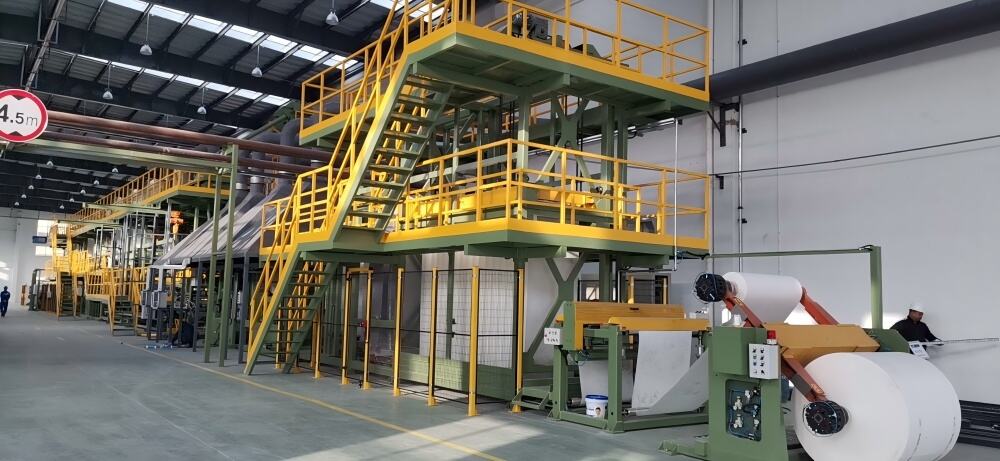
In the waterproofing and construction materials industry, the APP (Atactic Polypropylene) modified bitumen membrane is a cornerstone product. To the untrained eye, it may look like a simple bitumen sheet. However, to a production engineer, it is a complex polymer-modified composite that requires extreme thermal and mechanical precision.
Much like a high-performance HDPE production line used for GEOMEMBRANES or pressure pipes, an APP membrane line relies on the "heart" of the system: the extruder. Today, more manufacturers are shifting from traditional batch mixing to Twin-Screw Extrusion (TSE).
But why is "mixing accuracy" so vital? Let’s explore the technical synergy between twin-screw technology and APP membrane quality.
1. The Chemistry of APP: Why Mixing is a Challenge
APP membranes are created by modifying bitumen (asphalt) with atactic polypropylene and other plastomers. Unlike HDPE, which is a relatively "clean" polymer to extrude, bitumen is a multi-phase system containing asphaltenes, resins, and oils.
When you introduce APP into bitumen, you aren't just melting it; you are creating a polymer-bitumen matrix. If the mixing isn't accurate:
Phase Separation: The polymer and bitumen will separate over time, leading to membrane failure.
Inconsistent Softening Point: The temperature at which the membrane begins to flow will vary across the roll.
Low-Temperature Brittleness: Inaccurate mixing leaves the bitumen unprotected, causing it to crack in cold climates.
2. Twin-Screw vs. Batch Mixing: The Accuracy Revolution
Traditionally, APP membranes were made in large agitated tanks (batch mixing). However, just as an HDPE production line evolved from simple melt-extruders to high-torque precision systems, APP production has moved toward the twin-screw extruder for three primary reasons: Shear, Stay-time, and Scalability.
High-Shear Homogenization
A co-rotating twin-screw extruder utilizes intermeshing screws that create "high-shear zones." As the bitumen and APP pellets pass through kneading blocks, the polymer chains are physically forced into the bitumen structure.
In an HDPE line, shear is used to disperse color or antioxidants; in an APP line, shear is used to break down polymer clusters to a microscopic level (typically less than 5 microns). This level of "mixing accuracy" is impossible to achieve in a standard stirring tank.
3. Precision Temperature Control: Protecting the Polymer
Both HDPE and APP are sensitive to thermal degradation. If you overheat HDPE, it loses its tensile strength; if you overheat APP modified bitumen, the polymer chains "crack," and the bitumen oxidizes.
Twin-screw extruders offer superior temperature accuracy because:
Lower Residence Time: The material stays in the hot barrel for seconds, not hours (unlike batch tanks).
Surface Renewal: The screws constantly wipe the barrel walls, preventing "hot spots" where the material could char.
Modular Cooling: Most twin-screw barrels are divided into multiple zones with independent water-cooling, allowing for a precise temperature profile (e.g., 180°C in the melting zone, dropping to 160°C for stabilization).
4. Synergy: What APP Lines Learn from HDPE Production Lines
If you operate an HDPE production line, you know that "Output Stability" is king. The same applies to APP membranes. By applying HDPE-style extrusion principles to APP production, manufacturers gain:
Constant Feed Accuracy
Twin-screw systems use loss-in-weight (LIW) feeders. This ensures that the ratio of APP to bitumen is constant to within ±0.5%. In the production of HDPE pipes, this prevents weak spots; in APP membranes, this ensures that every square meter of the membrane has the exact same UV resistance and waterproof rating.
Inline Devolatilization
Bitumen often contains moisture or light oils that can create bubbles in the final membrane. Twin-screw extruders allow for vacuum degassing (devolatilization) during the mixing process. This "accuracy" in removing impurities results in a denser, more reliable waterproof barrier—mirroring the bubble-free finish required in high-end HDPE sheet extrusion.
5. The Impact of Mixing Accuracy on Product ROI
Why should a factory invest in the higher cost of a twin-screw system for their APP line? The answer lies in the Return on Investment (ROI) through material savings.
Polymer Efficiency: Because twin-screw mixing is so "accurate" and efficient, you can often achieve the same membrane performance using 2-3% less polymer than you would in a batch mixer. Over a year of production, this saving can pay for the extruder itself.
Zero Scrappage: In an HDPE production line, "start-up scrap" is a major cost. Twin-screw APP lines reach steady-state much faster than batch systems, reducing the amount of off-spec material produced during transitions.
Consistency for Automation: Automated roofing installation equipment requires membranes with consistent thickness and flexibility. Accurate twin-screw mixing ensures the product meets these tight tolerances.
6. Technical Comparison: Twin-Screw vs. Single-Screw for APP
While a single-screw extruder is excellent for the stable output of an HDPE production line, it is generally unsuitable for the initial mixing of APP membranes.
| Feature | Single-Screw | Twin-Screw (Co-rotating) |
| Mixing Type | Distributive (Low Shear) | Dispersive & Distributive (High Shear) |
| Self-Wiping | No (Material can hang up) | Yes (Clean-in-place effect) |
| Feeding | Flood fed | Starve fed (Precise ratio control) |
| APP Application | Final shaping only | Primary blending and modification |
7. Conclusion: The Precision Edge
The transition toward twin-screw mixing accuracy in APP membrane production lines is not just a trend—it is a technical necessity for modern construction standards. Much like the evolution of the HDPE production line, where precision determines the pressure rating of a pipe, the precision of an APP line determines the lifespan of a building's protection.
By utilizing twin-screw technology, manufacturers ensure:
Microscopic dispersion of polymers.
Thermal protection of expensive raw materials.
Absolute consistency across thousands of rolls.
In the competitive global market for waterproofing and industrial plastics, accuracy is the ultimate competitive advantage.
Table of Contents
- 1. The Chemistry of APP: Why Mixing is a Challenge
- 2. Twin-Screw vs. Batch Mixing: The Accuracy Revolution
- 3. Precision Temperature Control: Protecting the Polymer
- 4. Synergy: What APP Lines Learn from HDPE Production Lines
- 5. The Impact of Mixing Accuracy on Product ROI
- 6. Technical Comparison: Twin-Screw vs. Single-Screw for APP
- 7. Conclusion: The Precision Edge