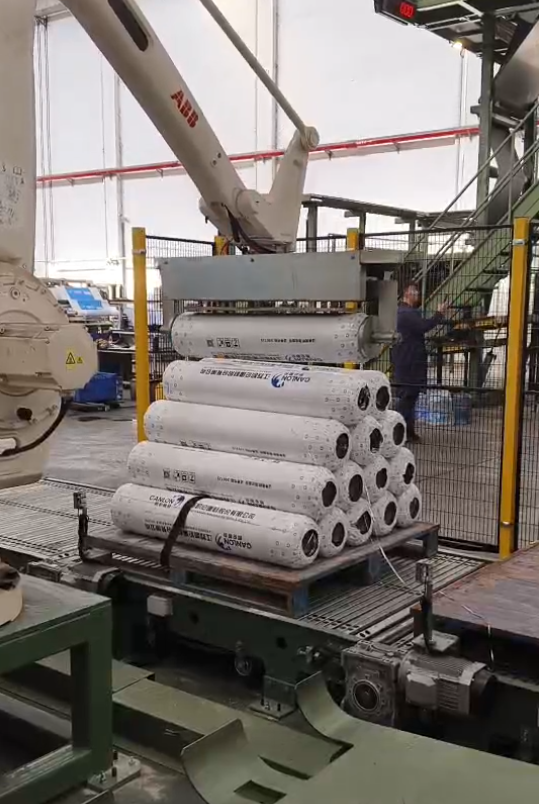
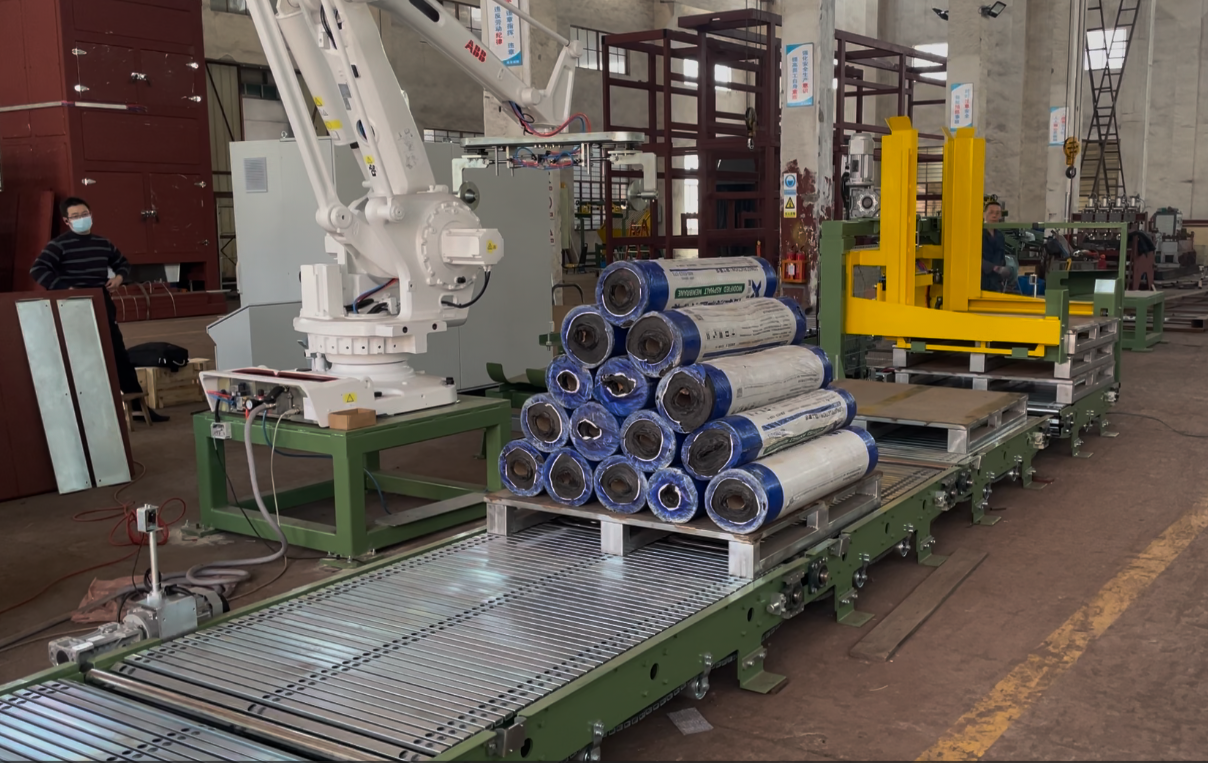
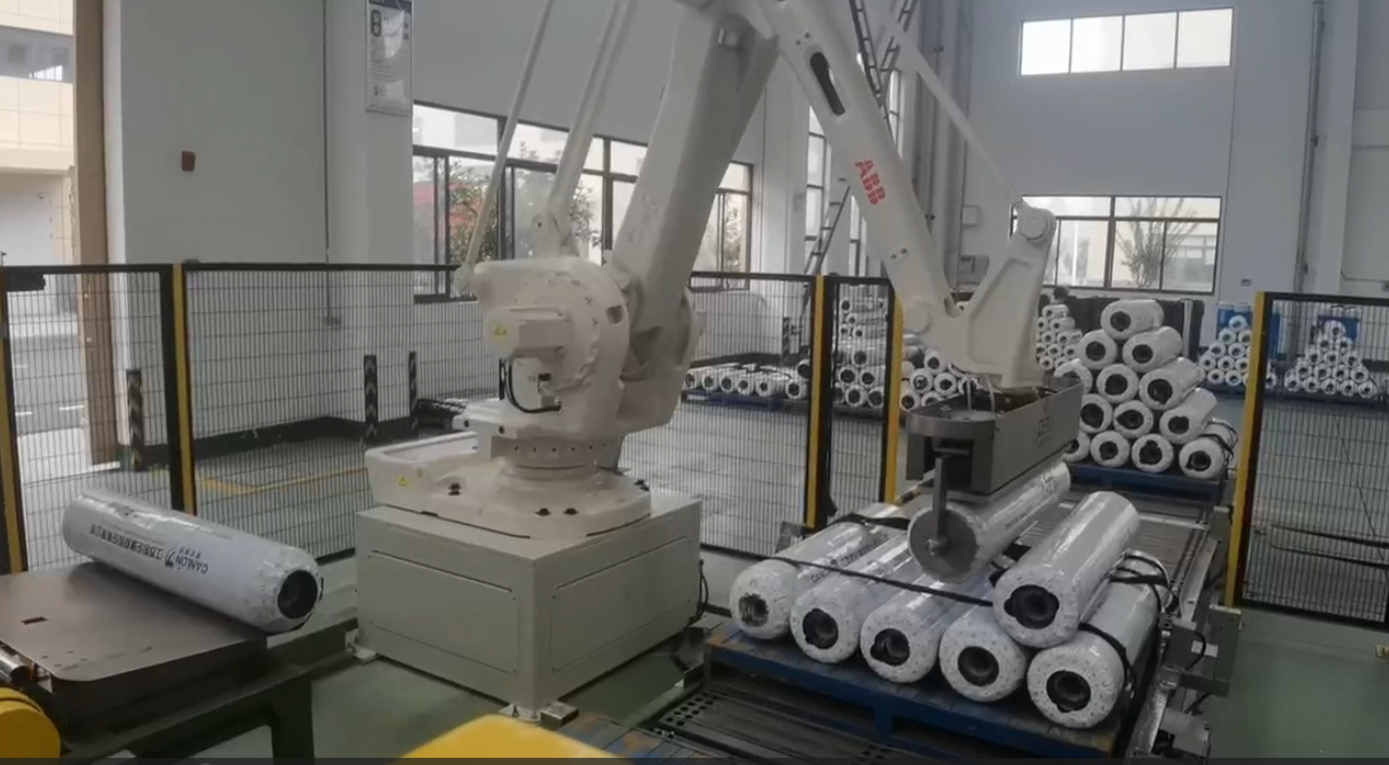
Advanced Automated Palletizing Systems - Robotic Solutions for Enhanced Warehouse Efficiency

All Categories

Get a Free Quote

Our representative will contact you soon.
Email
Name
Company Name
Message
0/1000
Attachment
Please upload at least an attachment
Up to 3 files,more 30mb,suppor jpg、jpeg、png、pdf、doc、docx、xls、xlsx、csv、txt

automated palletizing system

An automated palletizing system represents a revolutionary advancement in warehouse and manufacturing operations, transforming how businesses handle product packaging and shipping processes. This sophisticated technology combines robotics, artificial intelligence, and precision engineering to create seamless material handling solutions that eliminate manual labor bottlenecks. The automated palletizing system operates through integrated components including robotic arms, conveyor systems, sensors, and intelligent software that work together to stack products onto pallets with remarkable accuracy and speed. The main functions encompass product identification, precise placement, pattern optimization, and quality control verification throughout the entire palletizing process. Modern automated palletizing systems utilize advanced vision systems that can recognize different product shapes, sizes, and packaging types, automatically adjusting handling parameters to accommodate varying specifications. The technological features include programmable logic controllers, servo-driven mechanisms, safety monitoring systems, and user-friendly interfaces that allow operators to modify configurations quickly. These systems can handle diverse product categories from boxes and bags to irregularly shaped items, making them versatile solutions for multiple industries. Integration capabilities allow the automated palletizing system to connect seamlessly with existing warehouse management systems, enterprise resource planning software, and other automated equipment. Real-time monitoring and reporting functions provide valuable operational insights, helping businesses optimize their supply chain efficiency. The applications span across numerous sectors including food and beverage manufacturing, pharmaceutical production, consumer goods packaging, automotive parts distribution, and chemical processing facilities. Installation flexibility enables both retrofit implementations in existing facilities and incorporation into new construction projects, accommodating various spatial constraints and production requirements.

New Product Recommendations

The automated palletizing system delivers substantial operational improvements that directly impact your bottom line through enhanced productivity and cost reduction. Labor cost savings represent one of the most immediate benefits, as these systems eliminate the need for multiple workers to perform repetitive palletizing tasks, reducing payroll expenses while addressing labor shortage challenges that many industries face today. Consistency and reliability become guaranteed outcomes when implementing an automated palletizing system, as machines operate continuously without fatigue, breaks, or performance variations that naturally occur with human workers. This consistency translates into predictable production schedules and improved customer satisfaction through reliable delivery timelines. Speed improvements are remarkable, with automated palletizing systems capable of handling 15 to 30 cases per minute compared to the 8 to 12 cases typically managed by manual operations. Safety enhancements protect your workforce by removing employees from potentially hazardous environments involving heavy lifting, repetitive motions, and proximity to moving machinery. Workers can focus on higher-value tasks that require critical thinking and problem-solving skills rather than physically demanding repetitive work. Quality improvements emerge through precise placement algorithms that create stable, uniform pallet loads, reducing product damage during transportation and storage. The automated palletizing system maintains exact positioning tolerances, ensuring optimal weight distribution and reducing the risk of load shifting or collapse. Flexibility advantages allow quick changeovers between different product lines and pallet patterns without extensive downtime or retraining requirements. Space utilization becomes more efficient as automated systems can operate in tighter spaces and create more compact pallet configurations than manual methods typically achieve. Return on investment calculations typically show payback periods ranging from 12 to 24 months, depending on operation size and current labor costs. Long-term operational savings continue accumulating through reduced workers' compensation claims, decreased product damage rates, improved inventory accuracy, and enhanced overall equipment effectiveness. These systems operate 24/7 without overtime costs, maximizing production capacity during peak demand periods while maintaining consistent performance standards.

Practical Tips

Why monitor melt temperature across an HDPE production line extruder?

17

Dec

Why monitor melt temperature across an HDPE production line extruder?

High-density polyethylene (HDPE) manufacturing demands precise temperature control throughout the extrusion process to ensure product quality, consistency, and operational efficiency. Temperature monitoring across an HDPE production line extruder ser...
View More
What causes edge curl in a pre-applied membrane production line output?

06

Feb

What causes edge curl in a pre-applied membrane production line output?

Edge curl is one of the most challenging defects encountered in waterproofing membrane manufacturing, particularly affecting the quality and performance of finished products from a pre-applied membrane production line. This manufacturing anomaly occu...
View More
Modified Bitumen Waterproofing Membrane vs. Other Systems

06

Feb

Modified Bitumen Waterproofing Membrane vs. Other Systems

Modified bitumen waterproofing membrane represents a significant advancement in commercial and residential waterproofing technology, offering superior protection against water infiltration compared to traditional roofing systems. This innovative wate...
View More
Modified Bitumen Waterproofing Membrane Life Expectancy

06

Feb

Modified Bitumen Waterproofing Membrane Life Expectancy

Modified bitumen waterproofing systems represent one of the most durable and reliable solutions for commercial and residential roofing applications. Understanding the life expectancy of these advanced membrane systems is crucial for property owners, ...
View More

Get a Free Quote

Our representative will contact you soon.
Email
Name
Company Name
Message
0/1000
Attachment
Please upload at least an attachment
Up to 3 files,more 30mb,suppor jpg、jpeg、png、pdf、doc、docx、xls、xlsx、csv、txt

automated palletizing system

Advanced Robotics Technology for Maximum Precision

Advanced Robotics Technology for Maximum Precision

The cornerstone of every effective automated palletizing system lies in its sophisticated robotic technology that delivers unmatched precision and reliability in material handling operations. Modern robotic arms utilize servo-driven actuators and advanced motion control algorithms to achieve positioning accuracy within millimeters, ensuring perfect product placement every single time. These robots incorporate multi-axis movement capabilities that allow them to approach products from optimal angles, accommodating various packaging configurations while maintaining gentle handling to prevent damage. The robotic technology features adaptive grip systems that automatically adjust pressure and contact points based on product characteristics, whether handling delicate glass containers or robust corrugated boxes. Vision-guided systems enhance the automated palletizing system's capabilities by providing real-time feedback about product orientation, position, and quality, enabling immediate corrections and ensuring consistent pallet build quality. Force feedback sensors prevent over-gripping or excessive pressure application, protecting product integrity while maintaining secure handling throughout the palletizing process. The robotic components are designed for high-duty cycle operations, featuring industrial-grade components that withstand continuous operation in demanding manufacturing environments. Maintenance requirements remain minimal due to robust construction and predictive maintenance capabilities built into the automated palletizing system's monitoring functions. Programming flexibility allows operators to create custom palletizing patterns, adjust cycle times, and modify handling parameters through intuitive interfaces without requiring specialized robotics expertise. Safety features include collision detection, emergency stop functions, and protective barriers that ensure worker safety while maintaining optimal productivity levels. The robotic technology integrates seamlessly with upstream and downstream equipment, creating smooth material flow and eliminating bottlenecks in the production line. Advanced path planning algorithms optimize robot movements to minimize cycle times while reducing wear on mechanical components, extending equipment lifespan and maintaining consistent performance standards throughout years of operation.
Intelligent Software Integration for Seamless Operations

Intelligent Software Integration for Seamless Operations

The intelligent software platform that drives the automated palletizing system represents a technological breakthrough that transforms complex palletizing challenges into streamlined, efficient operations. This comprehensive software suite manages every aspect of the palletizing process, from initial product identification through final pallet completion and quality verification. Machine learning algorithms continuously analyze production patterns, optimizing palletizing sequences and identifying opportunities for cycle time improvements without human intervention. The software's pattern optimization engine calculates the most efficient product arrangements, considering factors such as weight distribution, stability requirements, shipping constraints, and storage considerations to create optimal pallet configurations. Real-time data collection and analysis provide valuable insights into production efficiency, equipment performance, and quality metrics, enabling informed decision-making and proactive maintenance scheduling. Integration capabilities allow the automated palletizing system to communicate seamlessly with warehouse management systems, enterprise resource planning platforms, and other manufacturing execution systems, creating a unified operational environment. The user interface design prioritizes simplicity and functionality, allowing operators with varying technical backgrounds to monitor system status, modify parameters, and troubleshoot issues effectively. Recipe management functions store unlimited product configurations, enabling quick changeovers between different items without manual reprogramming or extensive setup procedures. Predictive analytics identify potential issues before they impact production, scheduling maintenance activities during planned downtime and minimizing unexpected interruptions. Quality assurance modules verify pallet build quality through continuous monitoring, automatically rejecting defective pallets and alerting operators to potential problems. The software platform supports remote monitoring and diagnostics, allowing technical support teams to provide assistance and perform system updates without on-site visits. Reporting functions generate comprehensive production reports, efficiency analyses, and performance trends that help management make data-driven decisions about operational improvements and capacity planning initiatives.
Scalable Design for Growing Business Needs

Scalable Design for Growing Business Needs

The scalable architecture of modern automated palletizing systems ensures that your investment grows alongside your business, providing long-term value and adaptability to changing operational requirements. Modular design principles allow for easy expansion or reconfiguration as production volumes increase or product lines diversify, protecting your initial investment while accommodating future growth. The system's flexibility enables handling of multiple product types simultaneously, switching between different palletizing patterns and packaging configurations without significant downtime or additional equipment purchases. Capacity scaling options range from single-robot installations for smaller operations to multi-robot cells capable of handling high-volume production demands, ensuring the automated palletizing system matches your specific throughput requirements. Integration flexibility supports various conveyor systems, packaging equipment, and downstream automation, creating seamless material flow regardless of existing facility infrastructure. The control system architecture accommodates additional robots, expanded conveyor networks, and supplementary equipment without requiring complete system replacement or extensive reprogramming efforts. Future-ready technology platforms ensure compatibility with emerging industry standards, communication protocols, and automation technologies, protecting your investment against obsolescence. Standardized interfaces and open architecture design facilitate integration with third-party equipment and software systems, providing maximum flexibility for customization and expansion. Performance monitoring capabilities track system utilization and identify opportunities for capacity optimization, helping you make informed decisions about expansion timing and configuration options. The automated palletizing system's modular approach allows for phased implementation, spreading capital investment over time while immediately realizing productivity benefits from each installed component. Upgrade pathways enable incorporation of new technologies and capabilities as they become available, ensuring your palletizing solution remains at the forefront of industry innovation. Training and support programs scale with your operation, providing ongoing education and technical assistance as your team grows and your automated palletizing system expands to meet increasing production demands and evolving market requirements.
Advanced Automated Palletizing Systems - Robotic Solutions for Enhanced Warehouse Efficiency

Get a Free Quote

Our representative will contact you soon.
Email
Name
Company Name
Message
0/1000
Attachment
Please upload at least an attachment
Up to 3 files,more 30mb,suppor jpg、jpeg、png、pdf、doc、docx、xls、xlsx、csv、txt