 EN
EN
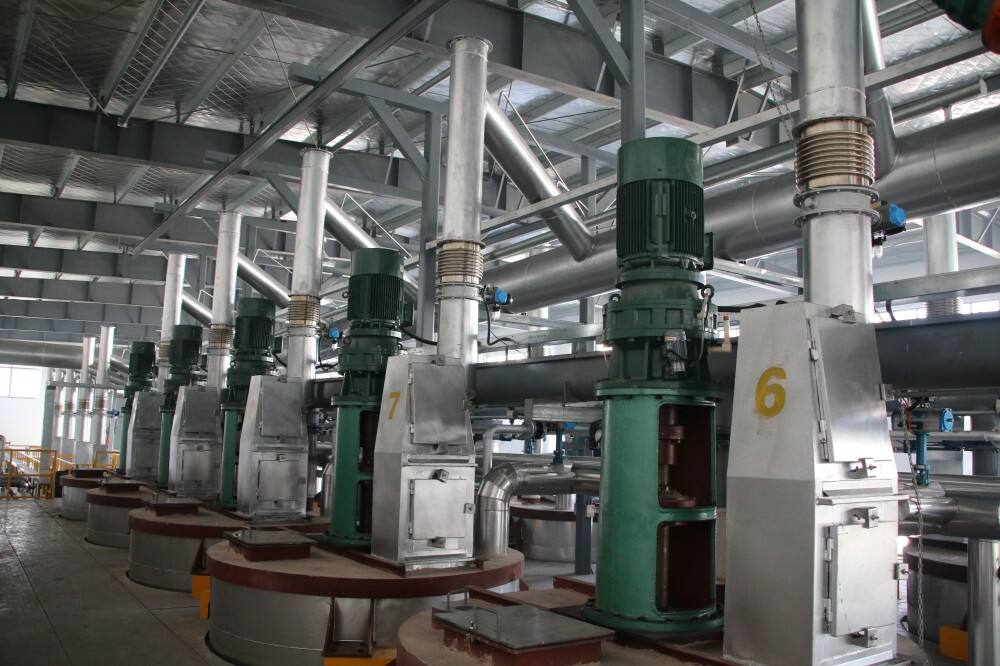
Manufacturing facilities across industrial sectors are increasingly turning to advanced maintenance strategies to minimize unexpected equipment failures and reduce operational costs. The membrane production industry, characterized by complex machinery and precise manufacturing processes, faces unique challenges when it comes to maintaining continuous operations. Predictive maintenance emerges as a transformative approach that leverages data analytics, sensor technology, and machine learning algorithms to anticipate equipment failures before they occur, potentially revolutionizing how membrane production facilities manage their maintenance schedules and operational efficiency.
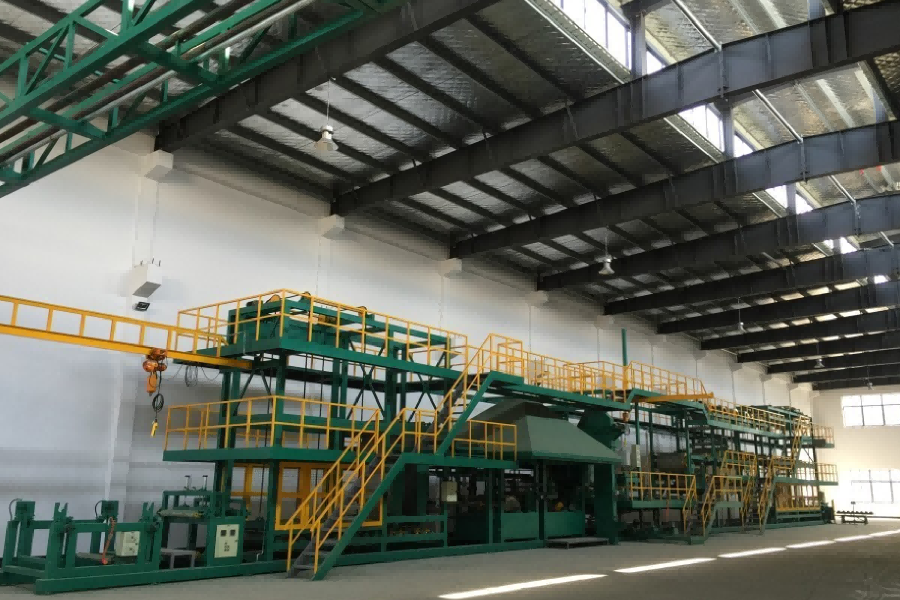
Understanding Predictive Maintenance in Membrane Manufacturing
Core Principles of Predictive Maintenance Technology
Predictive maintenance represents a paradigm shift from traditional reactive and preventive maintenance approaches by utilizing real-time data collection and analysis to predict when equipment components are likely to fail. This methodology employs sophisticated sensors, vibration analysis, thermal imaging, and oil analysis to monitor equipment health continuously. In membrane production environments, where precision and consistency are paramount, predictive maintenance systems can detect subtle changes in machinery performance that might indicate impending failures, allowing maintenance teams to schedule interventions during planned downtime rather than responding to unexpected breakdowns.
The technology behind predictive maintenance encompasses Internet of Things sensors, edge computing devices, and cloud-based analytics platforms that work together to create comprehensive equipment monitoring systems. These systems collect vast amounts of operational data, including temperature fluctuations, pressure variations, vibration patterns, and electrical consumption metrics. Advanced algorithms analyze this data to identify patterns and anomalies that correlate with specific failure modes, enabling maintenance teams to take proactive action before critical equipment failures occur.
Implementation Strategies for Membrane Production Lines
Successful implementation of predictive maintenance in membrane production facilities requires a systematic approach that begins with comprehensive equipment assessment and data collection infrastructure development. Production managers must identify critical equipment components that have the highest impact on production continuity and quality, such as extruders, calendering machines, coating systems, and quality control instruments. Each piece of equipment requires specific sensor configurations and monitoring parameters tailored to its operational characteristics and failure modes.
The implementation process typically involves installing condition monitoring sensors on rotating machinery, establishing baseline performance metrics for normal operations, and developing customized algorithms that can distinguish between normal operational variations and indicators of developing problems. Training maintenance personnel to interpret predictive maintenance data and integrate these insights into their maintenance planning processes is equally important for successful adoption. Organizations must also establish clear protocols for responding to predictive maintenance alerts and ensure that maintenance teams have the necessary spare parts and resources to address identified issues promptly.
Cost Analysis and Financial Impact Assessment
Direct Cost Reduction Through Downtime Prevention
The financial impact of implementing predictive maintenance in membrane production facilities can be substantial, with direct cost reductions primarily achieved through significant reductions in unplanned downtime. Unscheduled equipment failures in membrane production lines can result in production losses ranging from thousands to hundreds of thousands of dollars per hour, depending on the facility size and production capacity. By identifying potential equipment failures weeks or months in advance, predictive maintenance allows production planners to schedule maintenance activities during planned downtime periods, minimizing the impact on production schedules and customer deliveries.
Traditional reactive maintenance approaches often result in extended downtime periods because maintenance teams must first diagnose the problem, order replacement parts, and then perform repairs under time pressure. Predictive maintenance eliminates much of this uncertainty by providing advance warning of impending failures, allowing maintenance teams to prepare thoroughly for repair activities. This preparation includes ensuring that all necessary parts and tools are available, scheduling appropriate technical personnel, and coordinating with production teams to minimize operational disruption.
Indirect Cost Benefits and Operational Efficiency Gains
Beyond direct downtime cost reductions, predictive maintenance delivers numerous indirect financial benefits that contribute to overall operational efficiency and profitability. Equipment operating under predictive maintenance programs typically experiences longer service life because problems are addressed before they cause significant damage to machinery components. This extended equipment life translates to reduced capital expenditure requirements for equipment replacement and major overhauls, allowing facilities to optimize their capital investment strategies and improve return on assets.
Quality improvements represent another significant indirect benefit of predictive maintenance implementation in membrane production facilities. Equipment operating within optimal parameters produces more consistent product quality, reducing waste, rework, and customer complaints. Predictive maintenance systems can detect subtle changes in equipment performance that might affect product quality before these changes become visible in final product specifications, enabling proactive adjustments that maintain quality standards throughout the production process.
Technology Integration and Data Management Systems
Sensor Technology and Monitoring Infrastructure
Modern predictive maintenance systems rely on advanced sensor technologies that can monitor multiple equipment parameters simultaneously while providing accurate, real-time data transmission to centralized monitoring systems. Vibration sensors detect changes in machinery balance, alignment, and bearing condition, while temperature sensors monitor thermal conditions that might indicate lubrication problems, electrical issues, or mechanical friction. Pressure sensors track hydraulic and pneumatic system performance, and current signature analysis monitors electrical motor health and performance characteristics.
The integration of these diverse sensor technologies requires robust data management infrastructure capable of collecting, storing, and analyzing large volumes of operational data. Edge computing devices installed near production equipment can perform initial data processing and filtering, reducing network bandwidth requirements while enabling rapid response to critical alerts. Cloud-based analytics platforms provide the computational power necessary for complex predictive algorithms while offering scalability and accessibility for multi-site operations.
Data Analytics and Machine Learning Applications
Effective predictive maintenance programs depend on sophisticated data analytics capabilities that can identify meaningful patterns within complex operational datasets. Machine learning algorithms excel at recognizing subtle correlations between multiple variables that might not be apparent through traditional analysis methods. These algorithms continuously learn from operational data, improving their predictive accuracy over time as they encounter more examples of normal and abnormal equipment behavior.
Pattern recognition algorithms can identify recurring sequences of events that precede equipment failures, enabling maintenance teams to develop more accurate failure prediction models. Anomaly detection systems continuously compare current equipment performance against established baselines, automatically flagging deviations that might indicate developing problems. Time series analysis helps predict the progression of wear conditions and estimate remaining useful life for critical components, supporting optimal maintenance scheduling decisions.
Industry Case Studies and Performance Metrics
Manufacturing Facility Success Stories
Several membrane production facilities have documented significant improvements in operational performance following predictive maintenance implementation. A major automotive membrane manufacturer reported a forty-five percent reduction in unplanned downtime within the first year of predictive maintenance deployment, resulting in annual cost savings exceeding two million dollars. The facility achieved these results by focusing predictive maintenance efforts on critical production equipment including extruders, laminating machines, and quality control systems.
Another case study from a medical membrane production facility demonstrated how predictive maintenance contributed to improved regulatory compliance and product quality consistency. The facility implemented comprehensive monitoring systems that tracked equipment performance parameters critical to product quality, enabling proactive adjustments that maintained consistent product specifications. This proactive approach reduced quality-related production losses by thirty percent while simultaneously improving customer satisfaction scores and reducing warranty claims.
Return on Investment Calculations and Metrics
Calculating return on investment for predictive maintenance initiatives requires comprehensive analysis of both implementation costs and operational benefits over extended time periods. Initial implementation costs typically include sensor hardware, data management infrastructure, software licensing, and personnel training expenses. These upfront investments are generally recovered within eighteen to thirty-six months through operational cost reductions and efficiency improvements, depending on facility size and equipment complexity.
Key performance indicators for predictive maintenance programs include mean time between failures, overall equipment effectiveness, maintenance cost per unit produced, and unplanned downtime hours. Successful programs typically demonstrate fifteen to twenty-five percent improvements in overall equipment effectiveness, twenty to thirty percent reductions in maintenance costs, and significant improvements in production schedule reliability. These metrics provide quantifiable evidence of predictive maintenance value while supporting continuous improvement initiatives.
Implementation Challenges and Solutions
Technical Integration Complexities
Implementing predictive maintenance systems in existing membrane production facilities presents several technical challenges that require careful planning and execution. Legacy equipment may lack the sensor mounting points and electrical connections necessary for comprehensive monitoring, requiring custom engineering solutions and equipment modifications. Older machinery control systems might not provide the data interfaces needed for integration with modern predictive maintenance platforms, necessitating additional hardware and software components to bridge compatibility gaps.
Network infrastructure requirements for predictive maintenance systems can be substantial, particularly in large manufacturing facilities with distributed equipment locations. Reliable data transmission from production floor sensors to centralized monitoring systems requires robust networking capabilities that can handle continuous data streams while maintaining cybersecurity standards. Facilities must often upgrade their information technology infrastructure to support predictive maintenance requirements while ensuring that production operations remain secure and reliable.
Organizational Change Management
Successful predictive maintenance implementation requires significant organizational change management efforts to ensure that maintenance personnel, production operators, and management teams understand and embrace new maintenance methodologies. Traditional maintenance approaches based on scheduled interventions and reactive repairs must be replaced with data-driven decision-making processes that rely on predictive analytics and proactive maintenance scheduling. This transition requires comprehensive training programs and ongoing support to help personnel develop new skills and confidence in predictive maintenance technologies.
Resistance to change represents a common challenge in predictive maintenance implementation, particularly among experienced maintenance technicians who have developed expertise in traditional maintenance approaches. Organizations must demonstrate the value and effectiveness of predictive maintenance through pilot programs and early successes while providing adequate training and support to help personnel adapt to new technologies and procedures. Clear communication about the benefits of predictive maintenance for both organizational performance and individual job security helps build support for implementation initiatives.
Future Trends and Technology Evolution
Artificial Intelligence and Advanced Analytics
The future of predictive maintenance in membrane production facilities will be increasingly shaped by advances in artificial intelligence and machine learning technologies that can provide more accurate predictions and automated decision-making capabilities. Deep learning algorithms are becoming more sophisticated at recognizing complex patterns in multi-dimensional datasets, enabling more precise failure predictions and reducing false alarm rates that can undermine confidence in predictive maintenance systems.
Natural language processing technologies are beginning to incorporate maintenance logs, operator reports, and historical documentation into predictive maintenance analytics, providing additional context for equipment condition assessment. These capabilities enable predictive maintenance systems to consider factors beyond sensor data, including maintenance history, operating conditions, and environmental factors that might influence equipment reliability and performance characteristics.
Integration with Smart Manufacturing Systems
Predictive maintenance technologies are increasingly being integrated with broader smart manufacturing initiatives that encompass production planning, quality management, and supply chain optimization. This integration enables more holistic approaches to manufacturing optimization that consider equipment condition, production requirements, and resource availability simultaneously. Predictive maintenance data can inform production scheduling decisions, ensuring that maintenance activities are coordinated with production demands and customer delivery requirements.
The Industrial Internet of Things continues to expand the scope and capabilities of predictive maintenance systems by enabling more comprehensive equipment monitoring and integration with enterprise resource planning systems. This connectivity allows predictive maintenance insights to influence broader business decisions including inventory management, production capacity planning, and capital investment strategies. As these technologies mature, predictive maintenance will become an integral component of comprehensive digital manufacturing ecosystems.
FAQ
What is the typical payback period for predictive maintenance investments in membrane production facilities
The payback period for predictive maintenance investments typically ranges from eighteen to thirty-six months, depending on facility size, equipment complexity, and current maintenance costs. Facilities with high-value production equipment and significant downtime costs often achieve faster payback periods, while smaller operations may require longer timeframes to recover implementation costs. The key factors influencing payback period include initial implementation costs, current unplanned downtime expenses, maintenance labor costs, and the frequency of equipment failures under traditional maintenance approaches.
How does predictive maintenance compare to preventive maintenance in terms of cost effectiveness
Predictive maintenance generally provides superior cost effectiveness compared to traditional preventive maintenance by reducing unnecessary maintenance activities while preventing unexpected failures more effectively. Preventive maintenance relies on scheduled interventions based on time or usage intervals, which can result in premature component replacement and excessive maintenance costs. Predictive maintenance uses actual equipment condition data to optimize maintenance timing, extending component life while maintaining reliability. Studies indicate that predictive maintenance can reduce maintenance costs by twenty to thirty percent compared to preventive maintenance approaches.
What are the most critical equipment components to monitor in membrane production lines
Critical equipment components for predictive maintenance monitoring in membrane production lines include extruders, calendering machines, coating and laminating systems, winding and unwinding equipment, and quality control instrumentation. These components have the highest impact on production continuity and product quality, making them priority targets for predictive maintenance implementation. Motors, pumps, compressors, and heat exchangers also represent important monitoring targets due to their role in supporting production processes and their potential for causing significant downtime when failures occur.
Can predictive maintenance systems integrate with existing manufacturing execution systems
Modern predictive maintenance systems are designed to integrate with existing manufacturing execution systems through standardized communication protocols and application programming interfaces. This integration enables predictive maintenance data to influence production scheduling, quality management, and resource planning decisions. However, successful integration requires careful planning to ensure data compatibility, security protocols, and system reliability. Organizations should work with experienced system integrators to develop comprehensive integration strategies that maximize the value of both predictive maintenance and manufacturing execution system investments.
Table of Contents
- Understanding Predictive Maintenance in Membrane Manufacturing
- Cost Analysis and Financial Impact Assessment
- Technology Integration and Data Management Systems
- Industry Case Studies and Performance Metrics
- Implementation Challenges and Solutions
- Future Trends and Technology Evolution
-
FAQ
- What is the typical payback period for predictive maintenance investments in membrane production facilities
- How does predictive maintenance compare to preventive maintenance in terms of cost effectiveness
- What are the most critical equipment components to monitor in membrane production lines
- Can predictive maintenance systems integrate with existing manufacturing execution systems